
LAS NOTICIAS CON LA MONT* 📰
📃 *Premio Internacional Periodismo Y Periodismo Migrante*📃
La Información Directa a tu Celular 📲 de HOY *Lunes 29 de Agosto 2022* *En El Plano Nacional e Internacional*:
*📰Diario con La Mont📰*
https://www.federicolamont.com/
*Over Caves and Over Budget, Mexico’s Train Project Barrels Toward Disaster*

Pitched as a way to develop the country’s poorest region, the Maya Train is threatened by a ballooning budget and rushed construction over fragile terrain. But Mexico’s president has refused to slow it down.
Twisted tree trunks were plowed into high piles along a slash of freshly cut jungle, like thousands of discarded matchsticks as far as the eye could see. This path of deforestation in southern Mexico was recently cleared to make way for an ambitious government project: the Maya Train railway.
Pitched as a means to reinvigorate the country’s poorest region and one of its least connected, the Maya Train is one of President Andrés Manuel López Obrador’s crown jewels — a project on which he has staked his legacy.
A “great detonator” for the south’s economy, a government spokesman for the lead agency called it.
But the cargo and passenger train line, expected to be nearly 1,000-miles long, is shaping up to be the president’s most contentious undertaking yet. At the very least, it is wildly over budget, may not bolster the economy like it was promised to, and will be subsidized by taxpayers for years to come, analysts and project officials say. At worst, it could collapse into the ground because of rushed construction, government officials and project contractors warn.
Despite many concerns raised by officials, advisers, scientists and even the rail’s supporters, Mr. López Obrador has refused to slow the project down, hellbent on inaugurating it before his term ends in 2024.
It is the largest of some $45 billion worth of major infrastructure projects that the Mexican leader has vowed to deliver, but that so far have yet to produce the economic or political benefits he promised.
The president “is not someone who listens,” said Gemma Santana Medina, a consultant on the project who resigned last year after criticizing the planning. She is one of several current and former officials who said the president has not heeded their expertise.
*Document Inquiry Poses Unparalleled Test for Justice Dept.*
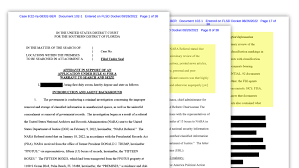
What had started as an effort to retrieve national security documents has now been transformed into one of the most challenging and complicated criminal investigations in recent memory.
As Justice Department officials haggled for months this year with former President Donald J. Trump’s lawyers and aides over the return of government documents at his Florida home, federal prosecutors became convinced that they were not being told the whole truth.
That conclusion helped set in motion a decision that would amount to an unparalleled test of the Justice Department’s credibility in a deeply polarized political environment: to seek a search warrant to enter Mar-a-Lago and retrieve what prosecutors suspected would be highly classified materials, beyond the hundreds of pages that Mr. Trump had already returned.
By the government’s account, that gamble paid off, with F.B.I. agents carting off boxloads of sensitive material during the search three weeks ago, including some documents with top secret markings.
But the matter hardly ended there: What had started as an effort to retrieve national security documents has now been transformed into one of the most challenging, complicated and potentially explosive criminal investigations in recent memory, with tremendous implications for the Justice Department, Mr. Trump and public faith in government.
*Trump’s Legal Team Scrambles to Find an Argument*

The lawyers representing the former president in the investigation into his handling of classified documents have tried out an array of defenses as they seek to hold off the Justice Department.
On May 25, one of former President Donald J. Trump’s lawyers sent a letter to a top Justice Department official, laying out the argument that his client had done nothing illegal by holding onto a trove of government materials when he left the White House.
The letter, from M. Evan Corcoran, a former federal prosecutor, represented Mr. Trump’s initial defense against the investigation into the presence of highly classified documents in unsecured locations at his members-only club and residence, Mar-a-Lago. It amounted to a three-page hodgepodge of contested legal theories, including Mr. Corcoran’s assertion that Mr. Trump possessed a nearly boundless right as president to declassify materials and an argument that one law governing the handling of classified documents does not apply to a president.
Mr. Corcoran asked the Justice Department to present the letter as “exculpatory” information to the grand jury investigating the case.
Government lawyers found it deeply puzzling. They included it in the affidavit submitted to a federal magistrate in Florida in their request for the search warrant they later used to recover even more classified materials at Mar-a-Lago — to demonstrate their willingness to acknowledge Mr. Corcoran’s arguments, a person with knowledge of the decision said.
*The ‘MacGyvered’ Weapons in Ukraine’s Arsenal*

The Ukrainian military has battled Russia with retrofitted equipment, including missiles and rocket systems mounted on trucks and speedboats, experts and officials say.
The billions of dollars in military aid the United States has sent Ukraine includes some of the most advanced and lethal weapons systems in the world. But Ukraine has also scored big successes in the war by employing the weapons and equipment in unexpected ways, and jury-rigging some on the fly, according to military experts.
From the sinking of the Moskva, Russia’s Black Sea flagship, in April to the attack on a Russian air base in Crimea this month, Ukrainian troops have used American and other weapons in ways few expected, the experts and Defense Department officials say.
By mounting missiles onto trucks, for instance, Ukrainian forces have moved them more quickly into firing range. By putting rocket systems on speedboats, they have increased their naval warfare ability. And to the astonishment of weapons experts, Ukraine has continued to destroy Russian targets with slow-moving Turkish-made Bayraktar attack drones and inexpensive, plastic aircraft modified to drop grenades and other munitions.
“People are using the MacGyver metaphor,” said Frederick B. Hodges, a former top U.S. Army commander in Europe, in a reference to the 1980s TV show in which the title character uses simple, improvised contraptions to get himself out of sticky situations.
*Xi Jinping’s Vision for Tech Self-Reliance in China Runs Into Reality*

After heavy national investment in semiconductors to break a dependence on global chips, Mr. Xi seems unhappy with the results.
Wearing a laboratory coat, China’s top leader, Xi Jinping, inspected a subsidiary of Yangtze Memory Technologies Company, a national semiconductor company based in Wuhan. It was April 2018, shortly after the U.S. government had barred the Chinese telecommunications firm ZTE from doing business with American suppliers.
The ban was a Sputnik moment for China’s tech industry and its leaders. Despite the country’s success in building smartphones, e-commerce platforms and high-speed railways, they realized that tech boom had been built largely on top of Western technologies, especially chips that power nearly everything. They had to change that — and fast.
Mr. Xi told the executives of Yangtze Memory, or YMTC, that semiconductors were as important for manufacturing as hearts for humans. “When your heart isn’t strong, no matter how big you are, you’re not really strong,” state media reported him saying. He urged them to hurry and make tech breakthroughs to contribute to the rejuvenation of the Chinese nation.
Mr. Xi has repeated that message ever since, with growing urgency as the United States tries to restrict China’s access to key semiconductor technologies. But a series of corruption investigations last month into the who’s who of the country’s semiconductor industry suggest that Mr. Xi may not be getting what he expected, or at least not quickly enough.
*Biden Becomes a Boon for Democrats*
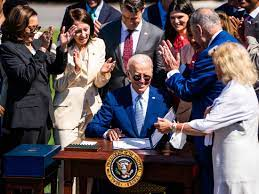
The coattail effect in politics is the theory that the popularity of a candidate at the top of the ticket redounds to the benefit of those in the same party down ballot.
You vote Democratic for president, then you might vote Democratic for senator or mayor.
But what do we call it when the person from whom the benefit flows is not actually on the ballot? What if the person isn’t even personally that popular?
Let’s call it phantom coattails.
That is what I believe is happening with President Biden at the moment. With a string of successes, he is building momentum and shaking off narratives of ineffectiveness.
Last week he announced that the federal government would forgive billions of dollars of student loan debt. Republicans predictably squawked about it being an unfair giveaway. Progressives complained that the plan didn’t go far enough.
*Lower Black and Latino Pass Rates Don’t Make a Test Racist*
The Association of Social Work Boards administers tests typically required for the licensure of social workers. Apparently, this amounts to a kind of racism that must be reckoned with.
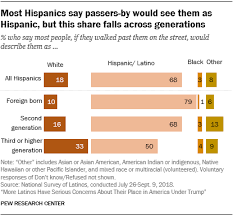
There is a Change.org petition circulating saying just that, based on the claim that the association’s clinical exam is biased because from 2018 to 2021 84 percent of white test-takers passed it the first time while only 45 percent of Black test-takers and 65 percent of Latino test-takers did. “These numbers are grossly disproportionate and demonstrate a failure in the exam’s design,” the petition states, adding that an “assertion that the problem lies with test-takers only reinforces the racism inherent to the test.” The petitioners add that the exam is administered only in English and its questions are based on survey responses from a disproportionately white pool of social workers.
But the petition doesn’t sufficiently explain why that makes the test racist. We’re just supposed to accept that it is. The petitioners want states to eliminate requirements that social workers pass the association’s tests, leaving competence for licensure to be demonstrated through degree completion and a period of supervised work.
So: It’s wrong to use a test to evaluate someone’s qualifications to be a social worker? This begins to sound plausible only if you buy into the fashionable ideology of our moment, in which we’re encouraged to think it’s somehow antiracist to excuse Black and brown people from being measured by standardized testing. There have been comparable claims these days with regard to tests for math teachers in Ontario and state bar exams, and, in the past, on behalf of applicants to the New York City Fire Department.
*ATENTAMENTE*
*MAESTRO FEDERICO LA MONT*
 Mexico Today USA