SEDENALEAKS REVELA CORRUPCIÓN MILITAR: VENDEN ARMAS DEL EJÉRCITO A CRIMINALES
Documentos hackeados a la Sedena revelan que un proveedor de armas para un grupo criminal tenía su base de operaciones en el Campo Militar 1 de la Ciudad de México, y otro cerca del octavo regimiento en Almoloya; vendían granadas en 26 mil pesos y los delincuentes hacían pedidos de miles de municiones 08 de Octubre de 2022 Mcci
Los archivos hackeados a la Secretaría de la Defensa Nacional (Sedena) han revelado que desde el Campo Militar No. 1 en la Ciudad de México se ha dado la venta de armas a criminales.
En un informe de inteligencia fechado el 10 de junio de 2019 se detalla que la Sedena tuvo conocimiento de que un militar ofrecía equipo táctico, armas y granadas, además de proporcionar información de movilidad y operativos de fuerzas armadas a una célula de un cártel del narcotráfico que tiene su base en Tejupilco, Estado de México.
«El 31 de mayo (de 2019), el militar ofreció a operadores del grupo delictivo 70 granadas de fragmentación a un costo de 26 mil pesos cada una; la célula delictiva confirmó la compra de ocho de ellas, las cuales fueron entregadas en Atlacomulco, Estado de México», se lee en el informe militar.
En el análisis de metadatos del equipo telefónico utilizado por el militar, las autoridades confirmaron que la base de operaciones del soldado ligado a criminales está en el municipio de Villa de Almoloya de Juárez, cerca del octavo regimiento mecanizado de la Sedena.
Además, la Sedena reportó en su informe confidencial que el proveedor de armas y equipo táctico es otro presunto integrante del Ejército, a quien los criminales se refieren como «antiguo» y que -según el análisis de su señal telefónica- tiene su base en el Campo Militar No. 1 de la Ciudad de México.
Al momento de elaborarse el reporte de inteligencia se desconocía la identidad de ambos militares.
En otro reporte elaborado el 24 de junio de 2019 se menciona que el militar que abastecía de armas a la célula delictiva es escolta de un mando castrense al que los criminales llaman «nuevo Comandante» y que tiene el rango de Coronel.
En las llamadas interceptadas por la Sedena, el militar informó a un líder del grupo delictivo que desde hacía dos semanas tenía un nuevo jefe y que forma parte de su escolta.
Describió a su superior como un Coronel originario de Tepalcatepec, Michoacán, «que gusta de dinero, bebida y le entra a todo».
Las llamadas interceptadas refieren que un líder criminal le pidió al militar «dos millares de municiones para fusil AK-47, cinco millares para R-15 y 50 cargadores de cada tipo de rifle».
Adicionalmente, el militar ofreció colaborar con los delincuentes para la ubicación del fiscal regional en Amecameca, porque supuestamente a petición del líder delictivo se planeaba su asesinato.
FUNCIONARIO NOMBRADO POR ADÁN AUGUSTO ES ACUSADO DE PROTEGER A GRUPO CRIMINAL
SedenaLeaks revela informes de inteligencia confidenciales en los que se menciona al Secretario de Seguridad de Tabasco y a dos de sus colaboradores como cómplices de “La Barredora”. El funcionario acusado fue nombrado en 2019 por el entonces gobernador Adán Augusto López, actual Secretario de Gobernación
POR: MCCI 5 OCTUBRE, 2022
COMPARTE Informes de inteligencia hackeados a la Sedena identificaron como cómplice de un grupo criminal al Secretario de Seguridad y Protección Ciudadana de Tabasco (SSPC), Hernán Bermúdez Requena, quien fue nombrado en ese cargo por el actual secretario de Gobernación, Adán Augusto López.
Los reportes señalan que el titular de la SSPC y dos directores de la Policía Estatal nombrados por Adán Augusto mientras era gobernador de Tabasco pertenecen a una organización criminal llamada «La Barredora», dedicado al narcotráfico y al huachicol, y que según la Sedena es una célula del Cártel Jalisco Nueva Generación.
Incluso, en algunos informes se mencionan conversaciones entre delincuentes que se refieren directamente al «gobernador» como aliado del líder delictivo, sin dar la identidad de la persona a la que se refieren.
Los documentos confidenciales, extraídos de los archivos de la Secretaría de la Defensa Nacional por el colectivo de hacktivistas Guacamaya, presentan un diagnóstico de la actividad delictiva en Tabasco.
Uno de los informes de inteligencia de mayo de 2021 menciona el nombre de Adán Augusto, en el siguiente párrafo transcrito textualmente: “Pantera (líder del grupo criminal) está con el gobierno, está con el gobernador (quizá Adán Augusto López Hernández, gobernador de Tabasco)”.
Los reportes hackeados a la Sedena fueron elaborados entre 2019 y 2022. El más reciente corresponde a agosto del presente año. Uno de los informes de 2021 menciona que el llamado “Comandante H” intervino para que el grupo criminal tomara el control de cuatro municipios tabasqueños, incluido Macuspana, de donde es originario el presidente López Obrador.
Uno de los reportes de la Sedena cita textual el nombre de Hernán Bermúdez Requena con el apodo de “El Comandante H”, como colaborador del grupo criminal “La Barredora”, presuntamente vinculado al Cártel Jalisco.
“Hernán Bermúdez Requena, ‘Comandante H’, autorizó que ‘Pantera’ (presunto líder del grupo delictivo) tomara el control de Huimaguillo y parte de Cárdenas, Tabasco”, refiere un informe de inteligencia fechado en mayo de 2021.
Incluso, en distintos informes se incluyó una fotografía del Secretario de Seguridad tabasqueño, en un esquema en el que se menciona a otros integrantes del grupo delictivo.
El esquema menciona la presunta complicidad de otros funcionarios policiacos en Tabasco, incluidos agentes municipales, de la Fiscalía General de la República, de la Sedena y de la Secretaría de Marina.
Según el reporte de la Sedena, también están vinculados a “La Barredora” el director y un comisionado de la Policía estatal de Tabasco, así como un asesor de la SSPC.
adan agusto Adán Augusto López Hernández, durante la protesta de ley a Hernán Bermúdez Requena, como nuevo titular de la Secretaría de Seguridad y Protección Ciudadana Acusaciones de corrupción
En un reporte de inteligencia fechado el 25 de febrero de 2021 se menciona “la posible cooptación y corrupción de autoridades de la Secretaría de Seguridad y Protección Ciudadana de Tabasco por la presunta negociación para la liberación de integrantes de la delincuencia organizada”.
En ese documento se menciona la supuesta complicidad del “Comandante H”, posiblemente Hernán Bermúdez, según refiere el propio informe.
Se menciona que supuestamente se acordó pagar 500 mil pesos para liberar a unos detenidos. “Por la información central que se obtuvo se infiere la existencia de la corrupción de funcionarios de la Secretaría de Seguridad Pública del Estado de Tabasco al colaborar con la liberación de integrantes de la delincuencia organizada a cambio de un pago”, concluye el reporte de inteligencia.
grafico copia Reporte de inteligencia de agosto de 2022, en el que la Sedena menciona a tres mandos policiacos de Tabasco como miembros de un grupo criminal. Nombrado por Adán Augusto El nombramiento de Bermúdez Requena como titular de la SSPC se realizó el 11 de diciembre de 2019, y ese mismo día el entonces gobernador de Tabasco, Adán Augusto López, le tomó protesta.
Antes de su nombramiento, Bermúdez Requena se desempeñaba como director de la Policía de Investigación de la Fiscalía General del Estado de Tabasco, y antes se había desempeñado como director de prevención del delito y del Centro de Reinserción Social en Villahermosa.
Bermúdez Requena fue consultado sobre los señalamientos en su contra en los informes de inteligencia.
-¿Tiene alguna notificación oficial sobre presuntos vínculos con la célula del crimen organizado “La Barredora”? -se le preguntó anoche.
“Nunca he sido notificado ni mucho menos de nada de esto. Inclusive el día de hoy tuvimos reunión con la mesa y se tocó el tema. Nosotros tenemos reuniones en algo que se llama la GIO (Grupo de Inteligencia) donde nos reunimos Sedena, Marina, FGR, nosotros, para tocar temas sobre hechos delictivos (…) Yo platiqué con el CNI de aquí y se le preguntó en una mesa que sí él tenía conocimiento de su existencia el día de hoy y dijo ‘no’, pero no solamente a él. Se le preguntaron a todos. El gobernador dijo ‘¿ustedes tienen información?’, ‘yo no’. El señor gobernador ‘¿por qué?’ ‘Porque yo no soy investigador’”.
El funcionario negó que exista en Tabasco el grupo criminal conocido como “La Barredora”.
“La Barredora es inexistencial (sic), hay muchos que firman, pero aquí donde veo las mantas y las cartulinas son muy comunes, pero nosotros no hacemos investigación. Aquí no tenemos conocimiento que exista un cartel y más de esa magnitud. Existen delincuencia locales, son delincuentes locales y no se les puede llamar cárteles de delincuencia organizada. Nosotros en lo que respecta a la policía estatal nos enfocamos exclusivamente al municipio del Centro.
“Nosotros no podemos ni proteger, y bueno, cómo vamos a proteger algo que no se tiene la prueba de la existencia (…) yo no tengo conocimiento de la existencia (de ‘La Barredora’)”, dijo el funcionario.
“Si hay algo en contra pues en cualquier momento que me sienten en el banquillo de los acusados. Y lo puedo contestar todo así como se los estoy contestando a usted. Pero que hayan acusaciones sin fundamento pues eso deteriora la imagen. Y además yo creo sinceramente que esto como todo el mundo lo dice es un hackeo y no sabemos si realmente esa información viene de la Sedena o los mismos hackers están aprovechando esto para decir ‘esto encontramos ahí’. Es un invento, puede ser”, concluyó el funcionario de seguridad tabasqueño.
Se consultó a la Secretaría de Gobernación sobre este tema, pero no hubo respuesta a peticiones de entrevista.
*The Question Menacing Brazil’s Elections: Coup or No Coup?*
Follow our live coverage of Brazil’s presidential election between Bolsonaro and Lula.
BRASÍLIA — A simple but alarming question is dominating political discourse in Brazil with just six weeks left until national elections: Will President Jair Bolsonaro accept the results?
For months, Mr. Bolsonaro has attacked Brazil’s electronic voting machines as rife with fraud — despite virtually no evidence — and Brazil’s election officials as aligned against him. He has suggested that he would dispute any loss unless changes are made in election procedures. He has enlisted Brazil’s military in his battle. And he has told his tens of millions of supporters to prepare for a fight.
“If need be,” he said in a recent speech, “we will go to war.”
With its vote on Oct. 2, Brazil is now at the forefront of the growing global threats to democracy, fueled by populist leaders, extremism, highly polarized electorates and internet disinformation. The world’s fourth-largest democracy is bracing for the possibility of its president refusing to step down because of fraud allegations that could be difficult to disprove.
Yet, according to interviews with more than 35 Bolsonaro administration officials, military generals, federal judges, election authorities, members of Congress and foreign diplomats, the people in power in Brazil feel confident that while Mr. Bolsonaro could dispute the election’s results, he lacks the institutional support to stage a successful coup.
*North Korea Fires Powerful Missile, Using Old Playbook in a New World*
The last time Pyongyang launched a weapon over Japan was in 2017, when Donald J. Trump was president and Kim Jong-un seemed intent on escalating conflict with Washington.
The alarms began bleating from cellphones, radios and public speakers across northern Japan. It was 7:30 on Tuesday morning as residents were warned that North Korea had fired a missile over the country for the first time in five years, and that they should seek shelter.
“You can’t ever get used to that sound,” said Kazuyuki Tsuchiya, 72, who runs a small village inn on Hokkaido, the northernmost island of Japan. “It makes me feel so scared.”
Over the course of the year, North Korea’s missile provocations have become so frequent — 23 weapons tests since January, including four last week — that much of the public had ceased to pay attention. But Tuesday’s flyover, with alarm bells rousing residents from their sleep, reminded them of the rogue nuclear threat in a region already unsettled by China’s recent military drills near Taiwan.
*Russia-Ukraine War Ukraine Presses Forward on Two Fronts as Horrors of War Linger*
The Kremlin said on Monday that it did not know where the borders are for the regions in Ukraine it recently claimed to have annexed, the latest sign of the political disarray and improvisation that has accompanied Moscow’s setbacks on the battlefield.
The lower house of the Russian Parliament, the State Duma, on Monday ratified President Vladimir V. Putin’s attempted annexation of four regions in eastern and southern Ukraine — part of an official choreography meant to add a sheen of legitimacy to a move that no other nation has recognized as legal.
But frontline reality has intruded on the festivities. Since Mr. Putin delivered a major speech on Friday outlining his claims to the four Ukrainian regions, he has suffered military setbacks in at least three of them. Russian forces withdrew from the key railroad hub of Lyman in the Donetsk region on Saturday, while Russian proxy officials in the Luhansk and Kherson regions said on Monday that Ukrainian forces had made advances there.
The annexation claims were so muddled that Dmitri S. Peskov, the Kremlin’s spokesman, found himself forced to acknowledge on Monday that Russia’s borders — as the Russian government newly defines them — remained in flux.
He said that the state would consider all of the Donetsk and Luhansk regions — which make up the Donbas area of eastern Ukraine — to be part of Russia, even though Russian troops did not control them in full. But in the other two annexed regions — Kherson and Zaporizhzhia, which Russia also does not fully control — Mr. Peskov said that it was too soon to tell.
“Kherson and Zaporizhzhia, in terms of the borders, we’re going to continue to consult with the population of these regions,” Mr. Peskov said in his regular conference call with reporters. “We’re going to continue to consult with the people who live in these regions.”
Mr. Peskov’s comments showed that as Ukrainian forces continue to push back Russian troops, the Kremlin is increasingly struggling to explain those setbacks at home. He was also on the defensive on Monday when asked about the searing criticism of Russia’s military command by Ramzan Kadyrov, the strongman leader of the southern Russian republic of Chechnya and a close Putin ally. Mr. Kadyrov said Saturday that the top brass had “covered for” an “incompetent” general, a remarkable instance of public infighting within Russia’s ruling elite.
*Nobel Prize in Physics Is Awarded to 3 Scientists for Work in Quantum Technology*
Alain Aspect, John F. Clauser and Anton Zeilinger were recognized for their experiments in an area that has broad implications for secure information transfer and quantum computing.
The Nobel Prize in Physics was awarded to Alain Aspect, John F. Clauser and Anton Zeilinger on Tuesday for work that has “laid the foundation for a new era of quantum technology,” the Nobel Committee for Physics said.
The scientists have each conducted “groundbreaking experiments using entangled quantum states, where two particles behave like a single unit even when they are separated,” the committee said in a briefing. Their results, it said, cleared the way for “new technology based upon quantum information.”
The laureates’ research builds on the work of John Stewart Bell, a physicist who strove in the 1960s to understand whether particles, having flown too far apart for there to be normal communication between them, can still function in concert, also known as quantum entanglement.
According to quantum mechanics, particles can exist simultaneously in two or more places. They do not take on formal properties until they are measured or observed in some way. By taking measurements of one particle, like its position or “spin,” a change is observed in its partner, no matter how far away it has traveled from its pair.
*‘Where Am I Going to Go?’ Floridians Hit by a Hurricane and a Housing Crunch.*
Losses from the storm are just coming into focus. But what is clear is that recovery will be hardest on people already struggling to make ends meet.
Days after Hurricane Ian buffeted the state with a trifecta of wind, rain and storm surge, many Floridians are emerging from the wreckage uncertain of their next chapter — and fearing they may become homeless.
The extent of the damage and the number of people who lost their lives or homes is only beginning to come into focus. Much clearer is the storm’s likely broad and lasting impact on the recovery of those least able to afford it.
“I don’t have enough money to replace my car and my house. I got enough money to replace one or the other,” said Llewellyn Davenport, 50. The storm surge swallowed his car, and engulfed the 28-foot-trailer he lived in near Fort Myers.
Now Mr. Davenport, a sanitation worker, must make a tough decision: get another home or another car. “My entire life changed in a matter of hours.”
*In Retreat on Ukrainian Fronts, Russia Shows Signs of Disarray*
Confusion and recriminations marked the Russian efforts to call up draftees and claim sovereignty over Ukrainian territory, as well as the Russian response to battlefield setbacks.
Russian forces in Ukraine were on the run Monday across a broad swath of the front line, as the Ukrainian military pressed its blitz offensive in the east and made gains in the south, belying President Vladimir V. Putin’s claims to have absorbed into Russia territories that his armies are steadily losing.
Following the capture over the weekend of Lyman, a strategic rail hub and gateway to the eastern Donbas region, Ukrainian forces showed no sign of stopping, pushing eastward toward the city of Lysychansk, which Russia seized three months ago after bloody fighting. Any loss of territory in the Donbas undermines Mr. Putin’s objectives for the war he launched in February, which has focused on seizing and incorporating the region.
The Kremlin reflected the disarray of its forces on the ground, where territory was rapidly changing hands, acknowledging that it did not yet know what new borders Russia would claim in southern Ukraine. “In terms of the borders, we’re going to continue to consult with the population of these regions,” Mr. Putin’s spokesman, Dmitri S. Peskov, told reporters on Monday.
The military conscription Mr. Putin ordered on Sept. 21 to bolster his battered forces has set off nationwide turmoil and protest, bringing the war home to many Russians who had felt untouched by it. Many men have been drafted who were supposed to be ineligible based on factors like age or disability.
On Monday, the governor of the Khabarovsk region in the Far East said that half of the men called up there, numbering in the thousands, should not have been drafted and had been sent home and that the region’s military commissar had been dismissed.
*Donald Trump’s Methods*
He often utters falsehoods, but his speaking style is more strategic than it sometimes seems. Listen for the first time to audio clips from interviews with Maggie Haberman.
Donald Trump is the leading candidate to be the Republican nominee for president — for the third straight election — and he’s also a subject of multiple criminal investigations. My colleague Maggie Haberman has been covering him the entire time and has written a book about him, “Confidence Man,” being published tomorrow. She often broke stories in The Times that she uncovered while reporting for the book.
For today’s newsletter, I spoke with Maggie about what she’s learned, about how much the media should cover Trump and about what’s likely next for him.
David: You’ve spent more time covering and interviewing Trump than almost anybody, back to your days observing him when you were a New York Post reporter in the 1990s. You’ve also pointed out that he lies a lot. Given that, I’m curious: How does interviewing him help you better capture reality when he is not confined by reality?
Maggie: He’s a former president and a potential future candidate, with huge influence over the party. Among other things, interviewing him helps illuminate how he keeps that influence: his obsession with us-versus-them politics, with salesmanship and with presenting a version of himself that is often very different from who he actually is.
UNESCO nos abandonó»: Anar Karimov Al participar en la Conferencia Mundial Sobre Políticas Culturales y Desarrollo Sustentable 2030, UNESCO-Mondiacult 2022 reiteró que el principal objetivo de la conferencia fue ofrecer forma a un sector cultural más robusto y resistente, plenamente anclado en las perspectivas del desarrollo sostenible, así como en la promoción de la solidaridad, la paz y la seguridad, en consonancia con la visión consagrada en el informe del secretario general de la ONU «Nuestra Agenda Común» (septiembre de 2021), que se refiere a la cultura como un bien público mundial, para el bien de todos nosotros. Ehortó a los participantes sobre el genocidio etnocultural (etnocidio) cometido por Armenia en los antiguos territorios ocupados de Azerbaiyán durante casi 30 años y recordó en su conferencia de Prensa con representantes de medios impresos, electrónicos y digitales de Cdmx «Muchas mezquitas, monumentos históricos y diversas instituciones culturales fueron completamente destruidos como resultado de acciones sistemáticas y deliberadas sin precedentes contra el patrimonio cultural de Azerbaiyán durante la ocupación armenia.» Explicó que esos actos de genocidio contra el patrimonio histórico y cultural azerbaiyano fueron respondidos con el silencio de las organizaciones internacionales. Karimov señaló que después de liberar sus tierras de la ocupación, Azerbaiyán comenzó la restauración a gran escala, incluyendo la restauración del patrimonio cultural. Resaltó que el patrimonio cultural situado en el territorio de Azerbaiyán refleja la diversidad cultural del país y expresó la importancia de proteger y restaurar todos los monumentos culturales y religiosos, independientemente de su origen. Solicitó a la UNESCO enviar una misión técnica a Karabaj para impulsar una campaña mundial que puede aplicarse como modelo de promoción de la paz en las situaciones de post-conflicto existentes en diferentes regiones del mundo. Durante la sesión, el ministro Karimov, como representante de Azerbaiyán, que preside el Movimiento de Países No Alineados (MNOAL), hizo una declaración en nombre de los Estados miembros del MNOAL. En la declaración, los países de la ONU condenan todas las formas de racismo, discriminación racial, xenofobia e intolerancia, y señalan la importancia de las iniciativas nacionales, regionales e internacionales para la protección de los bienes culturales.
*Over Caves and Over Budget, Mexico’s Train Project Barrels Toward Disaster*
Pitched as a way to develop the country’s poorest region, the Maya Train is threatened by a ballooning budget and rushed construction over fragile terrain. But Mexico’s president has refused to slow it down.
Twisted tree trunks were plowed into high piles along a slash of freshly cut jungle, like thousands of discarded matchsticks as far as the eye could see. This path of deforestation in southern Mexico was recently cleared to make way for an ambitious government project: the Maya Train railway.
Pitched as a means to reinvigorate the country’s poorest region and one of its least connected, the Maya Train is one of President Andrés Manuel López Obrador’s crown jewels — a project on which he has staked his legacy.
A “great detonator” for the south’s economy, a government spokesman for the lead agency called it.
But the cargo and passenger train line, expected to be nearly 1,000-miles long, is shaping up to be the president’s most contentious undertaking yet. At the very least, it is wildly over budget, may not bolster the economy like it was promised to, and will be subsidized by taxpayers for years to come, analysts and project officials say. At worst, it could collapse into the ground because of rushed construction, government officials and project contractors warn.
Despite many concerns raised by officials, advisers, scientists and even the rail’s supporters, Mr. López Obrador has refused to slow the project down, hellbent on inaugurating it before his term ends in 2024.
It is the largest of some $45 billion worth of major infrastructure projects that the Mexican leader has vowed to deliver, but that so far have yet to produce the economic or political benefits he promised.
The president “is not someone who listens,” said Gemma Santana Medina, a consultant on the project who resigned last year after criticizing the planning. She is one of several current and former officials who said the president has not heeded their expertise.
*Document Inquiry Poses Unparalleled Test for Justice Dept.*
What had started as an effort to retrieve national security documents has now been transformed into one of the most challenging and complicated criminal investigations in recent memory.
As Justice Department officials haggled for months this year with former President Donald J. Trump’s lawyers and aides over the return of government documents at his Florida home, federal prosecutors became convinced that they were not being told the whole truth.
That conclusion helped set in motion a decision that would amount to an unparalleled test of the Justice Department’s credibility in a deeply polarized political environment: to seek a search warrant to enter Mar-a-Lago and retrieve what prosecutors suspected would be highly classified materials, beyond the hundreds of pages that Mr. Trump had already returned.
By the government’s account, that gamble paid off, with F.B.I. agents carting off boxloads of sensitive material during the search three weeks ago, including some documents with top secret markings.
But the matter hardly ended there: What had started as an effort to retrieve national security documents has now been transformed into one of the most challenging, complicated and potentially explosive criminal investigations in recent memory, with tremendous implications for the Justice Department, Mr. Trump and public faith in government.
*Trump’s Legal Team Scrambles to Find an Argument*
The lawyers representing the former president in the investigation into his handling of classified documents have tried out an array of defenses as they seek to hold off the Justice Department.
On May 25, one of former President Donald J. Trump’s lawyers sent a letter to a top Justice Department official, laying out the argument that his client had done nothing illegal by holding onto a trove of government materials when he left the White House.
The letter, from M. Evan Corcoran, a former federal prosecutor, represented Mr. Trump’s initial defense against the investigation into the presence of highly classified documents in unsecured locations at his members-only club and residence, Mar-a-Lago. It amounted to a three-page hodgepodge of contested legal theories, including Mr. Corcoran’s assertion that Mr. Trump possessed a nearly boundless right as president to declassify materials and an argument that one law governing the handling of classified documents does not apply to a president.
Mr. Corcoran asked the Justice Department to present the letter as “exculpatory” information to the grand jury investigating the case.
Government lawyers found it deeply puzzling. They included it in the affidavit submitted to a federal magistrate in Florida in their request for the search warrant they later used to recover even more classified materials at Mar-a-Lago — to demonstrate their willingness to acknowledge Mr. Corcoran’s arguments, a person with knowledge of the decision said.
*The ‘MacGyvered’ Weapons in Ukraine’s Arsenal*
The Ukrainian military has battled Russia with retrofitted equipment, including missiles and rocket systems mounted on trucks and speedboats, experts and officials say.
The billions of dollars in military aid the United States has sent Ukraine includes some of the most advanced and lethal weapons systems in the world. But Ukraine has also scored big successes in the war by employing the weapons and equipment in unexpected ways, and jury-rigging some on the fly, according to military experts.
From the sinking of the Moskva, Russia’s Black Sea flagship, in April to the attack on a Russian air base in Crimea this month, Ukrainian troops have used American and other weapons in ways few expected, the experts and Defense Department officials say.
By mounting missiles onto trucks, for instance, Ukrainian forces have moved them more quickly into firing range. By putting rocket systems on speedboats, they have increased their naval warfare ability. And to the astonishment of weapons experts, Ukraine has continued to destroy Russian targets with slow-moving Turkish-made Bayraktar attack drones and inexpensive, plastic aircraft modified to drop grenades and other munitions.
“People are using the MacGyver metaphor,” said Frederick B. Hodges, a former top U.S. Army commander in Europe, in a reference to the 1980s TV show in which the title character uses simple, improvised contraptions to get himself out of sticky situations.
*Xi Jinping’s Vision for Tech Self-Reliance in China Runs Into Reality*
After heavy national investment in semiconductors to break a dependence on global chips, Mr. Xi seems unhappy with the results.
Wearing a laboratory coat, China’s top leader, Xi Jinping, inspected a subsidiary of Yangtze Memory Technologies Company, a national semiconductor company based in Wuhan. It was April 2018, shortly after the U.S. government had barred the Chinese telecommunications firm ZTE from doing business with American suppliers.
The ban was a Sputnik moment for China’s tech industry and its leaders. Despite the country’s success in building smartphones, e-commerce platforms and high-speed railways, they realized that tech boom had been built largely on top of Western technologies, especially chips that power nearly everything. They had to change that — and fast.
Mr. Xi told the executives of Yangtze Memory, or YMTC, that semiconductors were as important for manufacturing as hearts for humans. “When your heart isn’t strong, no matter how big you are, you’re not really strong,” state media reported him saying. He urged them to hurry and make tech breakthroughs to contribute to the rejuvenation of the Chinese nation.
Mr. Xi has repeated that message ever since, with growing urgency as the United States tries to restrict China’s access to key semiconductor technologies. But a series of corruption investigations last month into the who’s who of the country’s semiconductor industry suggest that Mr. Xi may not be getting what he expected, or at least not quickly enough.
*Biden Becomes a Boon for Democrats*
The coattail effect in politics is the theory that the popularity of a candidate at the top of the ticket redounds to the benefit of those in the same party down ballot.
You vote Democratic for president, then you might vote Democratic for senator or mayor.
But what do we call it when the person from whom the benefit flows is not actually on the ballot? What if the person isn’t even personally that popular?
Let’s call it phantom coattails.
That is what I believe is happening with President Biden at the moment. With a string of successes, he is building momentum and shaking off narratives of ineffectiveness.
Last week he announced that the federal government would forgive billions of dollars of student loan debt. Republicans predictably squawked about it being an unfair giveaway. Progressives complained that the plan didn’t go far enough.
*Lower Black and Latino Pass Rates Don’t Make a Test Racist*
The Association of Social Work Boards administers tests typically required for the licensure of social workers. Apparently, this amounts to a kind of racism that must be reckoned with.
There is a Change.org petition circulating saying just that, based on the claim that the association’s clinical exam is biased because from 2018 to 2021 84 percent of white test-takers passed it the first time while only 45 percent of Black test-takers and 65 percent of Latino test-takers did. “These numbers are grossly disproportionate and demonstrate a failure in the exam’s design,” the petition states, adding that an “assertion that the problem lies with test-takers only reinforces the racism inherent to the test.” The petitioners add that the exam is administered only in English and its questions are based on survey responses from a disproportionately white pool of social workers.
But the petition doesn’t sufficiently explain why that makes the test racist. We’re just supposed to accept that it is. The petitioners want states to eliminate requirements that social workers pass the association’s tests, leaving competence for licensure to be demonstrated through degree completion and a period of supervised work.
So: It’s wrong to use a test to evaluate someone’s qualifications to be a social worker? This begins to sound plausible only if you buy into the fashionable ideology of our moment, in which we’re encouraged to think it’s somehow antiracist to excuse Black and brown people from being measured by standardized testing. There have been comparable claims these days with regard to tests for math teachers in Ontario and state bar exams, and, in the past, on behalf of applicants to the New York City Fire Department.
*If You’re Suffering After Being Sick With Covid, It’s Not Just in Your Head*
When the influenza pandemic of 1918-19 ended, misery continued.
Many who survived became enervated and depressed. They developed tremors and nervous complications. Similar waves of illness had followed the 1889 pandemic, with one report noting thousands “in debt and unable to work” and another describing people left “pale, listless and full of fears.”
The scientists Oliver Sacks and Joel Vilensky warned in 2005 that a future pandemic could bring waves of illness in its aftermath, noting “a recurring association, since the time of Hippocrates, between influenza epidemics and encephalitis-like diseases” in their wakes.
Then came the Covid-19 pandemic, the worst viral outbreak in a century, and when sufferers complained of serious symptoms that came after they had recovered from their initial illness, they were often told it was all in their head or unrelated to their earlier infection.
It wasn’t until the end of the first year of the pandemic that Congress provided $1.2 billion for the National Institutes of Health, which led to a long Covid research initiative called Recover, in February 2021. A year and a half later, there are few treatments and lengthy delays to get into the small number of long Covid clinics. Frontline medical workers don’t have the clinical guidelines they need, and some are still dismissive about the condition.
Long Covid sufferers who caught the virus early have entered their third year with the condition. Many told me they have lost not just their health but also their jobs and health insurance. They’re running out of savings, treatment options and hope.
To add to their misery — despite centuries of evidence that viral infections can lead later to terrible debilitating conditions — their travails are often dismissed as fantasy or as unworthy of serious concern.
Making matters worse is the general confusion that surrounds what exactly long Covid is. Current definitions are so broad and imprecise that they impede understanding.
The Centers for Disease Control and Prevention defines long Covid as having “a wide range of symptoms that can last more than four weeks or even months after infection.” The World Health Organization sets the line at three months and says symptoms must last “for at least two months and cannot be explained by an alternative diagnosis.” Both highlight fatigue, shortness of breath, cognitive dysfunction, brain fog, pain, digestive symptoms, depression, anxiety, cough, headache and sleep disturbances.
Under the C.D.C. definition, someone with a single symptom just four weeks after illness can be lumped under the long Covid umbrella with someone bedbound for years.
However, it’s been long known that many respiratory illnesses can cause lingering symptoms. One study found that about 30 percent of people with influenza had at least one symptom that would qualify as long Covid in the three and six month period after the acute illness, compared with about 37 percent of those who had Covid.
The symptom descriptions for long Covid are too vague. Do “brain fog” and “fatigue” mean people don’t feel as sharp as they were and are a little off their jogging times, or are they experiencing a cognitive crisis so profound that they cannot find words and are so fatigued that brushing their teeth leaves them unable to get out of bed for the rest of the day? The latter has happened even to some people who had mild bouts of Covid-19.
One of the most important findings is that, as with many other illnesses, the elderly or those already in frail health seem more likely to have ongoing issues, especially if they had severe cases of Covid.
Existing definitions fail to capture the subcategories of long Covid, with different symptom clusters and levels of severity and persistence, creating an obstacle to research and treatments.
A clinical trial that doesn’t differentiate among subcategories could miss signals of promising results that would help one group and not another.
Treatments, too, would differ. Some long Covid patients crash after even limited physical or cognitive effort. Staying within their limits, or pacing, is crucial. However, many told me their primary care physicians would tell them to condition themselves through increased activity. That’s sensible advice for others with mild deconditioning due to lingering symptoms, but it made them feel worse and resist the advice. Some told me that their physicians then saw them as stubborn and lazy.
In addition, if everything is long Covid, then some may suspect nothing is, fueling more mistrust.
In late May the C.D.C. reported that one-fifth of U.S. adults under 65 who had Covid experienced symptoms that “might be attributable” to their previous infection. The administration’s response to such studies didn’t seem to fit the scale of the seeming threat if, indeed, 20 percent of those who have had Covid are at risk for debilitating chronic illness.
We lack proper studies under any definition. So, as with the study that led to the C.D.C.’s long Covid estimates in May, researchers cobble together data from electronic health records, often billing codes, which are standardized diagnostic codes for insurers. It’s already recognized that such databases are too imprecise for research purposes and may be biased because they collect information only on people in the medical system. Making the interpretation even thornier is that if billing codes weren’t in patients’ files before they had Covid and they appeared in the files later, the C.D.C. paper classified them as “might be attributable” to Covid, regardless of what they were.
Plus, some of the science has been truly weak. While poring over that C.D.C. paper, I noticed it didn’t control for prior health status and age between those who were infected and the control group; without that, I don’t even know how to interpret the already muddled results.
Perhaps the best sense of long Covid’s prevalence comes from an ongoing British national survey that asks whether people were experiencing “symptoms more than four weeks after you first had Covid-19 that are not explained by something else.” Unfortunately, it has no control group and likely includes people without Covid who may be suffering from some symptoms tied to a stressful pandemic. Plus, four weeks is not enough time to weed out temporary issues.
However, even with those imperfections, 2.8 percent of those living in Britain in July said they experienced ongoing symptoms they attributed to having had Covid. Encouragingly, those numbers indicated declines over the past few months. However, 2 percent of those living in Britain said those symptoms had affected their day-to-day lives, and 0.6 percent reported that their daily activities had been “limited a lot.”
Just that is a very large number. For the United States, 0.6 percent of the population would mean about two million people potentially facing a debilitating condition, comparable to those expected to be diagnosed with cancer this year. Plus, the prospect of increased medical issues adds another category of concern besides self-reported symptoms.
Given so much evidence about postviral conditions, why wasn’t more done more quickly to address long Covid?
“Medicine doesn’t like what it can’t understand, so it often ignores it,” Ravindra Ganesh, a physician scientist who directs the post-Covid care clinic at Mayo Clinic, told me.
It’s increasingly clear that postviral conditions are key to understanding many illnesses.
People with multiple sclerosis were once told they had a conversion disorder — the historic catchall for “It’s in your head, dear.” Later, advances in imaging allowed cerebral lesions to be seen. Genetic and environmental conditions were later invoked as possible causes. However, this year a multidecade study showed something that was previously met with skepticism: multiple sclerosis follows from infections of the Epstein-Barr virus, sometimes even decades later.
Possible viral causes of cancers were largely scoffed at until 1984 when, armed with advances in genomics, Dr. Harald Zur Hausen tied the human papillomavirus to many cancers. In 2007 a vaccine for the human papillomavirus was approved, which, if everyone got vaccinated, could eliminate about 5 percent of cancer deaths, by my estimate.
Then there’s myalgic encephalomyelitis/chronic fatigue syndrome, an ailment that can leave previously healthy people bedbound and severely limit their physical or cognitive abilities. As many as three-quarters of M.E./C.F.S. patients trace their illness to an infection. But these patients have long been battling neglect and suspicion, with minuscule research devoted to the condition.
*Nicaragua Silences Its Last Outspoken Critics: Catholic Priests*
A wave of government attacks on church leaders has extinguished the last independent voice in the Central American nation.
He was the most prominent voice of protest in Nicaragua, using his pulpit to denounce the government’s detention of opponents and suppression of civic rights. Then, last week, the government came for him.
Bishop Rolando Álvarez was arrested after the police raided his residence and put him under house arrest and eight of his companions in jail.
The shocking arrest of Bishop Álvarez on Friday, the most senior clergyman to be detained in Latin America for political views in decades, was the latest and most aggressive move by Nicaragua’s president, Daniel Ortega, against the Roman Catholic Church. Until now, it was the only institution that had escaped his control after 15 years of uninterrupted rule.
But as Mr. Ortega, 76, last year began to purge the few remaining dissidents in politics, civil society, news media, academia, business and culture, the Catholic churches in this deeply religious Central American nation assumed an increasingly pivotal role. More than sources of spiritual solace, they became the only places in the country where citizens could speak their minds and listen to speakers who were not appointed by the state.
*NajibRazak, Malaysia’s Former Prime Minister, Is Headed to Prison*
Mr. Najib, convicted in a scandal involving the disappearance of billions from the government investment fund known as 1MDB, has exhausted his avenues of appeal.
Malaysia’s former prime minister, Najib Razak, who was convicted two years ago of participating in a multibillion-dollar corruption scandal, was headed for prison Tuesday to start serving a 12-year sentence after the nation’s highest court rejected his final appeal.
A five-judge federal court panel, headed by the nation’s chief justice, unanimously upheld Mr. Najib’s conviction on seven corruption counts after finding that his appeal was “devoid of any merits.”
The prospect of Mr. Najib, 69, going to prison concluded a stunning fall for the British-educated son of one prime minister and nephew of another who spent nearly his entire adult life in politics and held numerous cabinet posts.
“This is a historic moment in Malaysian politics,” said James Chin, a professor of Asian studies at the University of Tasmania and an expert on Malaysian politics. “This is the first time a prime minister, or an ex-prime minister, has been found guilty of corruption and is actually going to jail.”
*Russia-Ukraine War U.N. SecurityCouncil Meeting Focuseson Threat to Nuclear Plant*
As United Nations officials pleaded for inspection and demilitarization of a battle-scarred nuclear power plant caught in Russia’s war on Ukraine, the two countries traded harsh accusations at a Security Council meeting and a path forward to avert a nuclear disaster remained unclear.
Fighting near the Zaporizhzhia nuclear plant, Europe’s largest, has stoked alarm in recent days, amid fears that the transformation of the plant into a theater of war could lead to the risk of a catastrophic nuclear accident.
The Security Council held an emergency meeting on Tuesday at the request of Russia to discuss the situation around the plant. And despite contradictory narratives about responsibility for the escalating threat — Russia and Ukraine each blame the other — the council was unanimous in its alarm about the risks to the plant and calls for an end to the fighting.
Rosemary DiCarlo, the U.N.’s top chief for political and peace building affairs, addressed the council and urged Russia and Ukraine to provide secure and immediate access to inspectors from the U.N.’s nuclear watchdog, the International Atomic Energy Agency, or I.A.E.A.
“Agreement is urgently needed to reestablish Zaporizhzhia as purely civilian infrastructure and to ensure the safety of the area,” Ms.DiCarlo said. “We must be clear that any potential damage to Zaporizhzhia, or any other nuclear facilities in Ukraine, leading to a possible nuclear incident would have catastrophic consequences, not only for the immediate vicinity, but for the region and beyond.”
“To paraphrase the Secretary General’s blunt warning, any potential damage to Zaporizhzhia is suicidal,” she added.
The Russian military took control of the site in March but Ukrainian technicians still operate the facility. Fighting has continued near the plant including recent shelling that fell dangerously close to the reactors.
*Europe’s Rivers, Starved by Drought,Reveal Shipwrecks, Relics and Bombs*
The Danube River is running so low on water that the wreckage of German warships, sunk in 1944, has resurfaced, posing a danger to local ship traffic.
From the depths of the mighty Danube River, the hulking wrecks of more than a dozen German World War II ships have risen once again, exposed by a drought that has starved Europe’s rivers and led to some of the lowest water levels of the past century.
The exposed wrecks had been on the river’s bottom for nearly eight decades and emerge only when the water level is extremely low. An extraordinarily hot and dry summer rippling across Europe has dropped water levels precipitously, creating a hazard for local river transport and fishing on the Danube.
More broadly, the scorching weather has caused alarm across the continent as heat waves have increased at a faster rate, with scientists pointing to global warming and other factors as playing major roles.
*On the eve of Ukraine’s IndependenceDay, Zelensky vows to take back Crimea.*
He spoke with the same resoluteness and composure as he has almost every day for the last six months, the same furrow between his brows, the same conviction in his voice.
How does a country mark a day of independence, when its sovereignty is being threatened, when some of its people are living under occupation, when its land is being fought over, street by street? On the eve of Ukraine’s Independence Day, President Volodymyr Zelensky told his people the national holiday was all the more important because the nation was under threat.
“It happens at a time when we are fighting against the most dreadful threat to our statehood and at the same time when we have achieved the greatest national unity,” he said, clad in a olive-green version of the vyshyvanka, the traditional garb of Ukraine, embroidered with an armored vehicle and a tank.
“That is why we endured,” he added. “Because we united and united the world around true values.”
Echoing U.S. intelligence assessments and his own government’s warnings in recent days, he urged Ukrainians to prepare for Russia to escalate attacks on civilians around Wednesday’s holiday, which marks Ukraine’s break from the Soviet Union and coincides with six months since the start of Russia’s invasion.
*The F.S.B. has long faced suspicions that, rather than solving crimes, it stages or hides them.*
Three days before Russia invaded Ukraine in late February, Moscow’s domestic intelligence agency accused Ukraine of shelling a house used by Russian border guards and released a short video showing a destroyed building dangling a Russian flag.
The claim by the Federal Security Service, or F.S.B., of a Ukrainian attack, was quickly dismissed as a hoax. There was no crater in or around the building in the video, which looked more like an abandoned hut than a border guard shelter. The nearest Ukrainian military outpost was 25 miles away.
The episode recalled a series of events in 1939, when the Soviet Union shelled a village on its border with Finland. The Soviets blame Finland for the attack as a pretext to invade. That case helps explain why, on Monday, skepticism greeted claims by the F.S.B. that it had identified a Ukrainian woman as the culprit in a fatal car bombing near Moscow over the weekend.
The F.S.B. had seemingly solved the murder of Daria Dugina, the daughter of a notorious ultranationalist ideologue, with uncharacteristic speed. But the agency is less a serious law enforcement agency than a political tool. And like its Soviet-era predecessor, the K.G.B., the F.S.B. has been dogged for years by suspicions that it blames others for crimes it either committed itself, or had no real interest in solving because they involved well-connected Russians it dared not touch.
he National Archives found more than 150 sensitive documents when it got a first batch of material from the former president in January, helping to explain the Justice Department’s urgent response.
The initial batch of documents retrieved by the National Archives from former President Donald J. Trump in January included more than 150 marked as classified, a number that ignited intense concern at the Justice Department and helped trigger the criminal investigation that led F.B.I. agents to swoop into Mar-a-Lago this month seeking to recover more, multiple people briefed on the matter said.
In total, the government has recovered more than 300 documents with classified markings from Mr. Trump since he left office, the people said: that first batch of documents returned in January, another set provided by Mr. Trump’s aides to the Justice Department in June and the material seized by the F.B.I. in the search this month.
The previously unreported volume of the sensitive material found in the former president’s possession in January helps explain why the Justice Department moved so urgently to hunt down any further classified materials he might have.
And the extent to which such a large number of highly sensitive documents remained at Mar-a-Lago for months, even as the department sought the return of all material that should have been left in government custody when Mr. Trump left office, suggested to officials that the former president or his aides had been cavalier in handling it, not fully forthcoming with investigators, or both.
For Chernobyl Survivors, New Ukraine Nuclear Risk Stirs Dread*
They lived through what is considered the worst nuclear disaster in history. As fighting rages around the Zaporizhzhia plant, they fear another one.
For Valentyna Tkachenko, mere mention of the Zaporizhzhia power plant triggers tears of anguish. Like many around the world, she has been anxiously following the news about the fighting around the nuclear plant in southern Ukraine — but unlike most, she has seen a nuclear disaster unfold around her firsthand.
Ms. Tkachenko was 12 in 1986 when she spotted a glow from the direction of the Chernobyl power plant from her home in the village of Lubyanka, about 20 miles away. The plant in northern Ukraine had exploded, and was on fire.
She and her family were evacuated, and never returned to their home. Her aunt later died of cancer, an illness that Ms. Tkachenko said had affected many from her village. Ms. Tkachenko’s thick blond hair — “such a braid that no hairpin could cope with it,” she recalls — grew thinner, and then started falling out.
And now fear is growing about another nuclear plant in Ukraine, as Russian and Ukrainian forces exchange fire near it.
Pakistan’s Imran Khan Is Now the Target of Forces He Once Wielded*
Old allies like the military have turned against him, but the former prime minister’s appeal on the street has only grown stronger, setting up a dangerous showdown.
Former Prime Minister Imran Khan’s allies have been arrested. Media outlets and public figures considered sympathetic to him have been intimidated or silenced. He has been hit with charges under Pakistan’s antiterrorism act and faces the prospect of arrest.
For weeks, Pakistan has been gripped by a political showdown between the ruling establishment and Mr. Khan, the former cricket star turned populist politician who was ousted from the prime minister post this year. The drama has laid bare the perilous state of Pakistani politics — a winner-take-all game in which the security forces and the justice system are wielded as weapons to sideline those who have fallen out of favor with the country’s powerful military establishment or political elite.
That playbook has been decades in the making, and it has turned the country’s political sphere into a brutal playground in which only a few elite leaders dare play. It has also rendered the Pakistani public deeply disillusioned with the political system and the handful of family dynasties that have been at the top of it for decades.
I Don’t Feel Safe.’ Children Fear Going Back to School in Uvalde*
Three months after 19 students and two teachers died in a mass shooting at Robb Elementary School, some students are opting for online classes or private schools.
With a little more than two weeks left before the beginning of the school year, Tina Quintanilla-Taylor drove her 9-year-old daughter, Mehle, past the new school where she was supposed to start fourth grade.
The school is just a mile or so away from the one she attended last year, Robb Elementary School, now permanently closed after a gunman’s shooting rampage left 19 students and two teachers dead. The new school looked clean and welcoming, but Mehle and her mother said they felt uneasy. There were no police officers visible, Mehle said. The newly installed fencing, she said, looked “skinny” and easy to climb.
“I don’t feel safe,” she told her mother.
Ms. Quintanilla-Taylor has decided to enroll her daughter in online classes approved by the state, as have many other parents in Uvalde, where the trauma of the May 24 shooting still lingers after a summer of mourning. Some parents said they are also considering private schools, including one operated by Sacred Heart Catholic Church, which began the new school year on Aug. 15 with double its enrollment from last year for students in prekindergarten through sixth grade.
The Idea That Letting Trump Walk Will Heal America Is Ridiculous*
The main argument against prosecuting Donald Trump — or investigating him with an eye toward criminal prosecution — is that it will worsen an already volatile fracture in American society between Republicans and Democrats. If, before an indictment, we could contain the forces of political chaos and social dissolution, the argument goes, then in the aftermath of such a move, we would be at their mercy. American democracy might not survive the stress.
All of this might sound persuasive to a certain, risk-averse cast of mind. But it rests on two assumptions that can’t support the weight that’s been put on them.
The first is the idea that American politics has, with Trump’s departure from the White House, returned to a kind of normalcy. Under this view, a prosecution would be an extreme and irrevocable blow to social peace. But the absence of open conflict is not the same as peace. Voters may have put a relic of the 1990s into the Oval Office, but the status quo of American politics is far from where it was before Trump.
The most important of our new realities is the fact that much of the Republican Party has turned itself against electoral democracy. The Republican nominee for governor in Arizona — Kari Lake — is a 2020 presidential election denier. So, too, are the Republican nominees in Arizona for secretary of state, state attorney general and U.S. Senate. In Pennsylvania, Republican voters overwhelmingly chose the pro-insurrection Doug Mastriano to lead their party’s ticket in November. Overall, Republican voters have nominated election deniers in dozens of races across six swing states, including candidates for top offices in Georgia, Nevada and Wisconsin.
The Question Menacing Brazil’s Elections: Coup or No Coup?*
A simple but alarming question is dominating political discourse in Brazil with just six weeks left until national elections: Will President Jair Bolsonaro accept the results?
For months, Mr. Bolsonaro has attacked Brazil’s electronic voting machines as rife with fraud — despite virtually no evidence — and Brazil’s election officials as aligned against him. He has suggested that he would dispute any loss unless changes are made in election procedures. He has enlisted Brazil’s military in his battle. And he has told his tens of millions of supporters to prepare for a fight.
“If need be,” he said in a recent speech, “we will go to war.”
With its vote on Oct. 2, Brazil is now at the forefront of the growing global threats to democracy, fueled by populist leaders, extremism, highly polarized electorates and internet disinformation. The world’s fourth-largest democracy is bracing for the possibility of its president refusing to step down because of fraud allegations that could be difficult to disprove.
Yet, according to interviews with more than 35 Bolsonaro administration officials, military generals, federal judges, election authorities, members of Congress and foreign diplomats, the people in power in Brazil feel confident that while Mr. Bolsonaro could dispute the election’s results, he lacks the institutional support to stage a successful coup.
La Información Directa a tu Celular 📲 de HOY *Domingo 21 de Agosto 2022* *En El Plano Nacional e Internacional*:
*The Grand Theory Driving Putin to War*
News update: On Saturday an explosion near Moscow killed the daughter of Aleksandr Dugin, whose views are believed to have influenced Vladimir Putin’s decision to go to war in Ukraine.
President Vladimir Putin’s bloody assault on Ukraine, nearly a month in, still seems inexplicable. Rockets raining down on apartment buildings and fleeing families are now Russia’s face to the world. What could induce Russia to take such a fateful step, effectively electing to become a pariah state?
Efforts to understand the invasion tend to fall into two broad schools of thought. The first focuses on Mr. Putin himself — his state of mind, his understanding of history or his K.G.B. past. The second invokes developments external to Russia, chiefly NATO’s eastward expansion after the Soviet Union’s collapse in 1991, as the underlying source of the conflict.
But to understand the war in Ukraine, we must go beyond the political projects of Western leaders and Mr. Putin’s psyche. The ardor and content of Mr. Putin’s declarations are not new or unique to him. Since the 1990s, plans to reunite Ukraine and other post-Soviet states into a transcontinental superpower have been brewing in Russia. A revitalized theory of Eurasian empire informs Mr. Putin’s every move.
*The Sunday Read: ‘Can Planting a Trillion New Trees Save the World?’*
To fight climate change, companies and nonprofits have been promoting worldwide planting campaigns. Getting to a trillion is easier said than done.
In the past decade, planting trees has come to represent many things: a virtuous act, a practical solution and a symbol of hope in the face of climate change. But can planting a trillion trees really save the world?
Visiting the Eden Reforestation Projects in Goiás, Brazil, and interviewing numerous international scientists and activists, the journalist Zach St. George offers a vivid insight into the root of the tree-planting movement — from the Green Belt Movement of the 1970s to the Trillion Tree Campaign of the 2010s — and considers the concept’s environmental potential, as well as the movement’s shortcomings.
*Odesa Is Defiant. It’s Also Putin’s Ultimate Target.*
President Vladimir V. Putin knows that Ukraine’s fate, its access to the sea and its grain exports hinge on Odesa. Without it, the country shrivels to a landlocked rump state.
The Odesa Fine Arts Museum, a colonnaded early-19th-century palace, stands almost empty. Early in Russia’s war on Ukraine, its staff removed more than 12,000 works for safe keeping. One large portrait remained, depicting Catherine the Great, the Russian empress and founder of Odesa, as a just and victorious goddess.
Seen from below in Dmitry Levitzky’s painting, the empress is a towering figure in a pale gown with a golden train. The ships behind her symbolize Russia’s victory over the Ottoman Turks in 1792. “She’s textbook Russian imperial propaganda,” said Gera Grudev, a curator. “The painting’s too large to move, and besides, leaving it shows the Russian occupiers we don’t care.”
The decision to let Catherine’s portrait hang in isolation in the first room of the shuttered museum reflects a sly Odesan bravura: an empress left to contemplate how the brutality of Vladimir V. Putin, the Russian president who likens himself to a latter-day czar, has alienated the largely Russian-speaking population of this Black Sea port, established by her in 1794 as Moscow’s long-coveted conduit from the steppe to the Mediterranean.
Murillo y Robles, ¿sólo justicia o fichas políticas? Esto dicen analistas Tras detención de Murillo Karam y liberación de Rosario Robles, expertos coinciden en que se trata de actos mediáticos de este gobierno ante la crisis de seguridad en el país
En duda aplicación imparcial de la justicia La FGR solicitó prisión preventiva oficiosa contra Jesús Murillo Karam, pues dijo que posee medios para sustraerse de la justicia, así como amistades importantes en la fiscalía. Foto: ROGELIO MORALES/CUARTOSCURO NACIÓN 20/08/2022 23:10 Luis Carlos Rodríguez Actualizada 05:28
La detención del extitular de la Procuraduría General de la República, Jesús Murillo Karam y la liberación de la ex secretaria de Desarrollo Social, Rosario Robles, han despertado dudas por la forma simultánea en que ocurrieron. Para politólogos y juristas, las coincidencias no existen y se trata de actos mediáticos del presidente Andrés Manuel López Obrador frente a la grave crisis de inseguridad y violencia en el país.
Entrevistados por EL UNIVERSAL, el politólogo José Antonio Crespo, el analista y periodista Raúl Trejo Delarbre y el jurista y catedrático José Perdomo coincidieron en que ambos casos, ocurridos el viernes, confirman que en el país hay una aplicación selectiva de la justicia en contra de adversarios, lo cual sigue minando el Estado de derecho.
José Antonio Crespo opinó que la detención de Murillo Karam se trató de la aplicación de la justicia selectiva, con clara intención política por parte del gobierno “para no quedarse con las manos vacías, ni dejar inconcluso el caso de la desaparición de los 43 normalistas de Ayotzinapa”.
También lee: Murillo Karam comparece en el Reclusorio Norte por caso Ayotzinapa
Dijo que se tendrá que demostrar que Murillo Karam tuvo algo que ver con la desaparición y que ordenó la matanza de los estudiantes, como se le acusa de forma ambigua y confusa. Señaló que lo paradójico es que este gobierno ha liberado a casi todos los implicados, como El Gil, y ahora ha deteniendo a quienes los habían investigado y aprehendido.
“Una gran cantidad de los que sí fueron los asesinos y ahora están persiguiendo a quienes fueron los perseguidores de los asesinos. No digo que sea inocente [Murillo Karam], simplemente no deja de ser paradójico que los persecutores estén presos”, dijo.
Calificó como un “cochinero y un desastre” la investigación y manejo del caso por parte del gobierno y dijo que es obvia la intencionalidad política con la detención “para ganar legitimidad, poder salir del caso donde están descubriendo, después de ocho años, lo que todo el mundo sabía y no se atrevían a decir, que los estudiantes estaban muertos”.
Expuso que también puede existir una relación entre la detención de Murillo Karam y lo ocurrido en las últimas dos semanas en el país, con narcobloqueos, quema de negocios, homicidios de ciudadanos por parte de la delincuencia organizada y actos de terrorismo. “Creo que sí puede haber una relación”.
No cuenta con elementos, señaló, para establecer una relación o intencionalidad entre la detención de Murillo Karam y la liberación de Rosario Robles, pero dijo que en el caso de esta última hay indicios que indican que siempre existió una motivación política, porque estuvo presa tres años por un delito no grave.
Por su parte, José Perdomo coincidió en que hay una “justicia selectiva a modo para los amigos y otra para los adversarios”, lo cual mina el Estado de derecho y sólo provoca más impunidad.
Consideró que no es una “simple coincidencia” que hayan detenido al autor de la llamada verdad histórica y unas horas después liberaran a Rosario Robles, cuyos abogados tenían tres años pidiendo seguir el proceso en libertad. “Esto abona a la existencia de un pacto político entre López Obrador y Peña Nieto en el sentido de que siempre debe existir un detenido del sexenio anterior, un pez gordo para dar sustento al supuesto combate a la corrupción de la 4T”.
También lee: Rosario Robles confundió el camino de la izquierda con el robo y la corrupción, dice Jenaro Villamil
Argumentó que será muy difícil probar el delito de desaparición forzada en contra de Murillo Karam porque cualquier ilícito tiene que ser “personalísimo; es decir, por actos personales y directos y en este caso yo no veo que se pueda probar”, subrayó.
También calificó como paradójico que todos estos anuncios mediáticos de la detención de Murillo se den después de dos semanas de una crisis de violencia e inseguridad, donde la delincuencia organizada realizó bloqueos, asesinatos y quema de negocios, lo cual muestra el fracaso de la política de seguridad y ahora se quiere desviar la atención con este tipo de acciones.
Raúl Trejo Delarbre expuso que la detención de Jesús Murillo Karam es resultado de una operación de propaganda política del gobierno de López Obrador.
“Las conclusiones sobre Ayotzinapa que ha ofrecido Alejandro Encinas son esencialmente las mismas que presentó Murillo Karam en 2014”, expuso.
Sobre la excarcelación de Robles, dijo que se “pone fin, a medias, a una alevosa injusticia. Estuvo en prisión sin acusaciones sólidas. Independientemente de la opinión que tengamos sobre su vida pública, hay que reconocer que ha sido presa política del gobierno actual”, finalizó.
*Yo soy el arma secreta de AMLO para ganar la presidencia en el 2024: Monreal*
El coordinador de Morena en el Senado de la República, Ricardo Monreal Ávila, aseguró que él es el “arma secreta” del presidente Andrés Manuel López Obrador para ganar la Presidencia de la República en 2024.
De gira por La Paz, Baja California Sur, el senador morenista asistió a la entidad para establecer un diálogo con mujeres y empresarios, a fin de revisar la agenda legislativa que impulsará en el siguiente Periodo Ordinario de Sesiones.
Sin embargo, previo al diálogo Monreal Ávila expresó a medios de comunicación que: “soy como el arma secreta del Presidente”, pues al titular del Ejecutivo federal y al pueblo de México les conviene que él sea el sucesor.
Nuevamente reiteró que cuenta con la experiencia acumulada para desempeñar el cargo, que es un hombre sereno, prudente, con capacidad de dialogar con todos, por lo que, una vez que llegue el momento, “puedo ser el Presidente de la Reconciliación Nacional”.
“Estoy capacitado para enfrentar los grandes retos, sé lo que debemos hacer”, destacó el senador.
Por otro lado, insistió en que fue un error anticipar, con tanto tiempo, la sucesión presidencial, pues ya son 14 meses desde que se destaparon a las llamadas “corcholatas”, y esto puede generar fracturas al interior del movimiento.
*Murillo Karam ideó modus operandi de la “Verdad Histórica” en el caso Ayotzinapa: FGR*
La Fiscalía General de la República aseguró ante el juez Marco Antonio Fuerte Tapia que el procurador Jesús Murillo Karam “contribuyó a perpetuar la desaparición de los 43 normalistas de Ayotzinapa” y luego presentó conclusiones con pruebas alteradas “para construir y sostener una verdad histórica falsa”.
Así lo concluyó la fiscalía durante el inicio de la audiencia de imputación en el reclusorio Norte, tras asegurar que Murillo Karam es el responsable directo de esta investigación desde el momento que decidió atraer la investigación del caso el 6 de octubre de 2014 y poner como su mano derecha a Tomás Zerón de Lucio, hoy prófugo de la justicia en Israel.
La fiscalía señala al exfuncionario federal por los delitos de desaparición forzada cometido en contra de los 43 normalistas, de tortura cometido en contra de seis presuntos responsables en el caso y contra la administración de la justicia por entorpecer las investigaciones y alterarlas.
La fiscal Lidia Bustamante también aseguró que Murillo Karam es responsable debido a que tuvo bajo su control a los detenidos y sus declaraciones, tuvo control sobre las escenas del crimen y las evidencias, y fue responsable sobre el “modus operandi” para la creación de la verdad histórica.
El juez ya declaró como legal la detención de Karam que se llevó a cabo el viernes fuera de su domicilio en Lomas de Chapultepec.
Durante la audiencia que se sigue en contra del ex procurador Jesús Murillo Karam, dos padres de los 43 normalistas desaparecidos de Ayotzinapa comparecen en calidad de testigos en la sala contigua al ex funcionario.
Ante la sala, los padres fueron presentados con las iniciales MCGC y HHR, padres del estudiante CMGH, quienes no contaban con asesoría legal directa en la sala en la que estaban, razón por la cual el abogado ordenó brindarles acompañamiento.
📃 *Premio Internacional Periodismo Y Periodismo Migrante*📃
La Información Directa a tu Celular 📲 de HOY *Sábado 20 de Agosto 2022* *En El Plano Nacional e Internacional*:
*A Migrant Wave Tests New York City’s Identity as the World’s Sanctuary*
New York wants to welcome new immigrants. Its economy and vibrancy depend on them. But an influx has strained a social safety net already on the brink.
The four buses crossed into Manhattan on Wednesday morning and turned off a bustling avenue onto a shadowed side street in Midtown. The names printed on the buses — “VLP Charter,” “Coastal Crew Change” — gave no hint of their mission. Only Texas license plates gave them away.
One by one, their riders stepped out into an unfamiliar city, some tired but smiling, others just tired: men wearing backpacks, women clutching babies and blankets, children hanging onto teddy bears. One man wore no shoes, just socks.
The city’s immigrant affairs commissioner, Manuel Castro, shook everyone’s hand. A man in a green T-shirt high-fived the children. Tables were laden with snacks, sanitizer, clothes, brightly colored book bags. People with clipboards proffered papers to fill out to earn a new identity: In addition to being undocumented immigrants and asylum seekers, the new arrivals would also join the ranks of homeless New Yorkers.
The influx of migrants to the city this spring and summer, most fleeing crime and cratering economies in Central and South America, has tested New York’s reputation as a world sanctuary. And it shows no sign of slowing, thanks in part to Gov. Greg Abbott of Texas, whose decision to send busload after busload to Washington and New York to goad Democrats on border policy has helped turn the normal north-flowing river of humanity into a wave.
*Ukrainian Strikes May Be Slowing Russia’s Advance*
A new strategy of attacks on logistical targets in Russian-held territory is having an impact, analysts say, symbolically as well as militarily.
The Ukrainian military extended the fight deeper into Russian-controlled territory on Friday, as it sharpens a strategy of trying to degrade Moscow’s combat capabilities by striking ammunition depots and supply lines in the occupied Crimean Peninsula and other areas the Kremlin had long thought to be safe.
Crimea, a key staging ground for Russia’s invasion, has been firmly under Kremlin control since it was illegally annexed by Moscow in 2014. But it has been rocked by several recent attacks, some carried out by clandestine Ukrainian fighters operating behind enemy lines. Oleksiy Danilov, the head of Ukraine’s national security council, said on Friday that Kyiv would target sites in Crimea as part of a “step-by-step demilitarization of the peninsula with its subsequent de-occupation.”
Overnight into Friday, blasts hit at a military airfield outside Sevastopol, the largest city in Crimea and home to Russia’s Black Sea Fleet; the Russians later said the booms were the sound of successful antiaircraft fire. Loud bangs were also reported above the Kerch Strait bridge, the only land link connecting Russia to Crimea. There appeared to be no damage to the bridge, and Russia said that those explosions, too, were the result of antiaircraft fire.
A large fire also broke out in an ammunition depot in Russia itself, in the border region of Belgorod, forcing the evacuation of two villages, according to the region’s governor, Vyacheslav Gladkov.
*As Alaska Warms, Fires Burn Over (and Under) More Wild Land*
Lightning storms, drought and thawing tundra are making fires more destructive. In the vast wilderness, firefighting is a major challenge.
In the wilds north of Denali, North America’s tallest mountain, the U.S. military built a radar installation near Russian airspace during the Cold War, to detect incoming ballistic missiles in the event of a nuclear strike.
As drought dried out parts of the Alaskan wilderness this summer, the complex came under attack — not by foreign forces, but by wildfire.
In the battle against the flames, an elite federal unit of smoke jumpers parachuted into dense spruce forests to clear a landing zone for fire crews. Nearly 600 firefighters fanned out in trucks, boats and amphibious vehicles to reach other remote areas around the Teklanika River. A helicopter crashed after taking off from a nearby airstrip, killing the seasoned pilot who was moving equipment to the front lines.
*Laterales Demand Social Media Firms Address Threats to Law Enforcement*
The Democrats who lead two House panels also expressed concern about “reckless statements” from Republicans after a surge in online threats following the F.B.I. search of Mar-a-Lago.
The leaders of two House panels sent letters on Friday to eight social media companies demanding that they take “immediate action” to address threats on their platforms toward federal law enforcement officials after a surge in right-wing calls for violence following the F.B.I.’s search of former President Donald J. Trump’s home in Florida.
In the letters, Representatives Carolyn B. Maloney, Democrat of New York and the chairwoman of the House Oversight Committee, and Stephen F. Lynch, Democrat of Massachusetts and the chairman of its National Security Subcommittee, also expressed concern about “reckless statements” from Mr. Trump and some Republican members of Congress. The statements have “coincided with a spike in social media users calling for civil war and violence toward law enforcement,” they said.
The letters were sent to mainstream platforms like Twitter, TikTok and Facebook’s parent company, Meta, as well as right-wing social media sites like Gab, Gettr and Rumble. A letter also went to Truth Social, Mr. Trump’s social media site, which erupted with calls for violence last week, after F.B.I. agents carted away boxes of highly sensitive documents from Mar-a-Lago, the former president’s estate in Palm Beach, Fla. Mr. Trump had apparently taken the materials from the White House and refused to return them.
*Coronavirus World Map: Tracking the Global Outbreak*
DAILY AVG. ON AUG. 19 14-DAY CHANGE TOTAL REPORTED
Cases 821,172 –14% 594,806,086
Deaths 2,489 +3% 6,447,013
*What Biden Has — and Hasn’t — Done*
There’s something strange in the D.C. air these days. It smells a bit like … competence.
Seriously, it has been amazing to watch the media narrative on the Biden administration change. Just a few weeks ago President Biden was portrayed as hapless, on the edge of presiding over a failed presidency. Then came the Inflation Reduction Act, a big employment report and some good news on inflation, and suddenly we’re hearing a lot about his accomplishments.
But I still don’t think the media narrative gets it quite right. Biden has indeed accomplished a lot — in some ways more than he’s getting credit for, even now. On the other hand, America is a huge nation with a huge economy, and his policies don’t look as impressive when you compare them with the scale of the nation’s problems.
Furthermore, at this point Biden is arguably benefiting from the soft bigotry of low expectations. His policy achievements are big by modern standards, but they wouldn’t have seemed astounding in an earlier era — the era before the radicalization of the Republican Party made it almost impossible to pursue real solutions to real problems.
So, what has Biden accomplished?
As I see it, he came into office with three main domestic policy goals: investing in America’s fraying infrastructure, taking serious action against climate change and expanding the social safety net, especially for families with children. He got most of two and a bit of the third.
*Trump Is Going After One of the Most Conservative Institutions in the U.S. Government*
Of all the weird and historically discordant moments and news stories of the Donald Trump era, few seem stranger than watching the former president and his allies demonize the F.B.I. as some sort of rogue “woke” Democratic deep state mob. This has been happening for several years now, but in the days since the F.B.I. searched Mr. Trump’s home at Mar-a-Lago, the bureau has attracted particularly withering criticism for its supposedly leftist persecution of Mr. Trump, and Republicans have even begun to call to “defund the corrupt F.B.I.”
Historically, though, the F.B.I. has been arguably the most culturally conservative and traditionally white Christian institution in the entire U.S. government. It’s an institution so culturally conservative, even by the standards of law enforcement, that Democratic presidents have never felt comfortable — or politically emboldened — enough to nominate a Democrat to head the bureau.
That’s right: Far from being a bastion of progressive thinking, every single director of the F.B.I. has been a Republican-aligned official, going all the way back to its creation. Such history suggests that the issue here is Mr. Trump and not institutional bias.
Its current director, Christopher Wray, who oversaw the agents conducting last week’s search of Mar-a-Lago, was nominated by Mr. Trump himself and came to the job with sterling Republican credentials: He was the head of the criminal division in George W. Bush’s Justice Department, a member of the conservative Federalist Society and a clerk for Judge J. Michael Luttig, a Republican judicial icon.

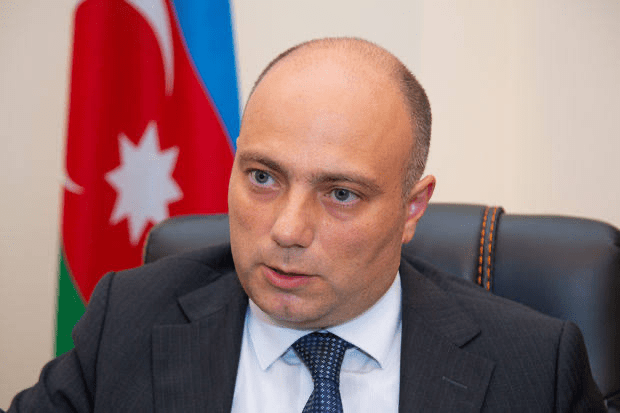
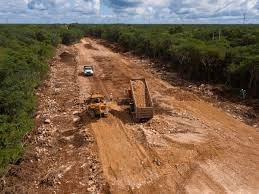
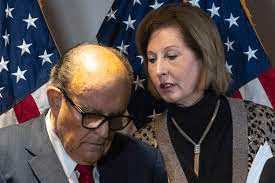
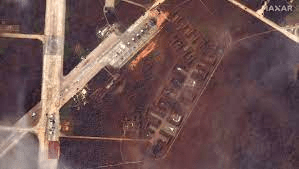

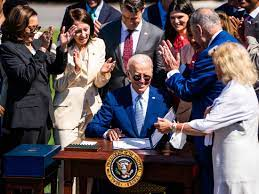
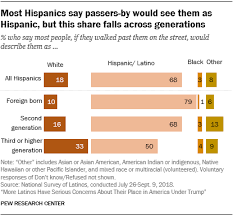
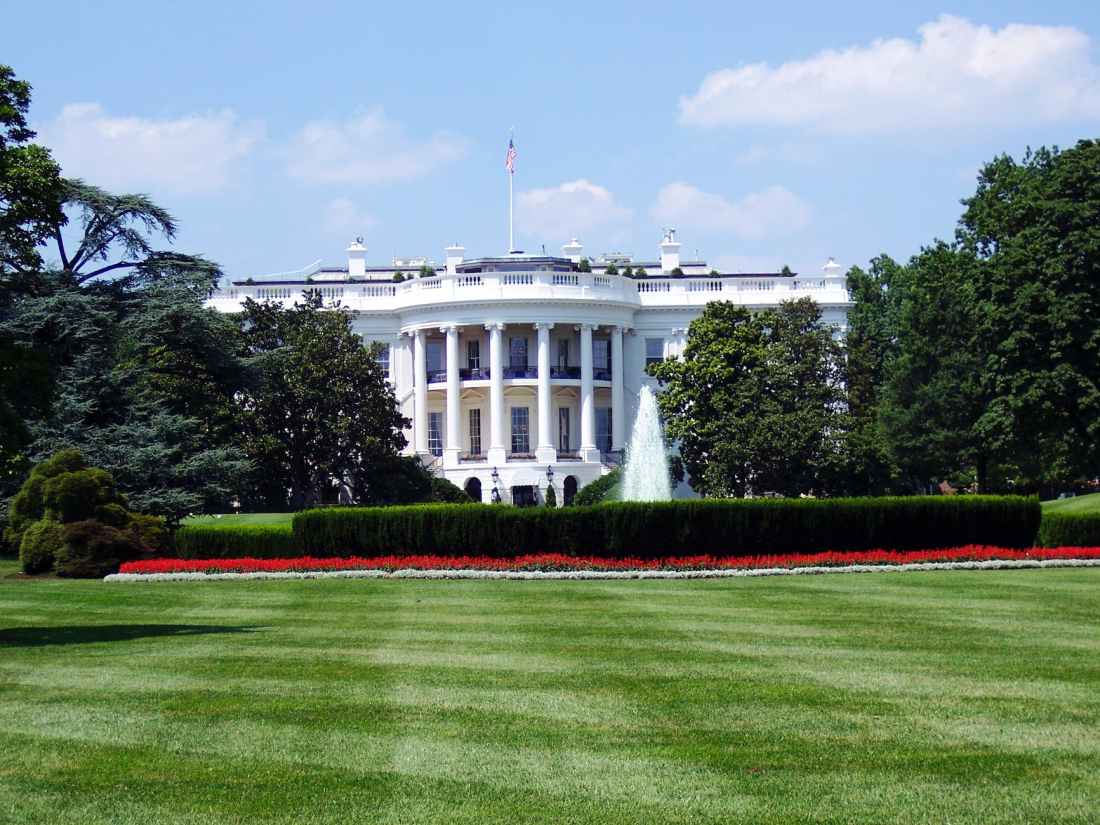
 Mexico Today USA