In Mexico, Music Festivals Go on Despite Violence

mexico-music-festivals

(Mexico, Rolling Stone) – In 2014, attendance had fallen sharply at Trópico, a Mexican music festival held in the resort city of Acapulco. The festival was only in its second year, and after 43 students disappeared in the nearby city of Iguala a few months prior, a large number of festivalgoers had the same thought: stay home.

But at one point during the three-day festival, organizer Pepe Bezaury recalled an atypical moment. The Rapture’s Luke Jenner, LCD Soundsystem’s Pat Mahoney and Hot Chip’s Alexis Taylor, among others, took to the stage before going silent. David Byrne then asked attendees to count to 43 in honor of the students, who the attorney general’s office says were turned over to cartel members by local police.

“From something really awful, something beautiful happened — that the 3,000 people that were there, we had a positive thought that we have to come together and work and move forward and try to end this impunity,” Bezaury tells Rolling Stone.

READ MORE

Mexico and U.S. studying NAFTA rules of origin proposals

Screen Shot 2018-08-08 at 10.16.27 AM

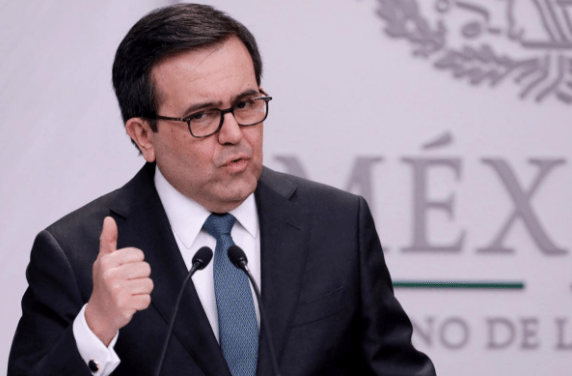
MEXICO CITY (Reuters) – Mexico’s economy minister Ildefonso Guajardo said on Monday the country has put forward a proposal to update the North American Free Trade Agreement’s contentious rules of origin, and in turn was studying the U.S. position.

The United States has demanded tougher rules of origin, particularly on what percentage of a car needs to be built in the NAFTA region to avoid tariffs than outlined in the current trade deal.

READ MORE

PHOTOS: What It’s Like On Both Sides Of The U.S.-Mexico Border’s Busiest Crossing

El pase de diapositivas requiere JavaScript.

(Mexico/USA NPR) – The busiest section of the U.S.-Mexico border is the Rio Grande Valley. It’s not unusual for Border Patrol agents to catch more than 500 immigrants a day trying to cross into the U.S. along this 55-mile stretch. In spite of increased border security and rising costs to cross, migrants are still determined to make the journey.

NPR recently spent time on both sides of the border, where immigration is part of everyday life.

READ MORE

Mexico troops find 150 Central Americans in back of truck

800px-Mexico_Flag_Bandera_de_Mexico_(Esparta)

MEXICO CITY (Reuters) – Some 150 Central American migrants, including 62 children, were found inside the back of trailer when the vehicle was stopped at a highway checkpoint, the Mexican government said on Saturday.

Federal police and Mexican immigration officials discovered the migrants while searching trucks on a highway in the southeastern state of Tabasco, according to joint statements from the federal police and immigration authorities.

Tens of thousands of Central Americans fleeing violence and poverty in their homelands try to pass through Mexico to the United States every year, often transported by human traffickers who subject them to dangerous conditions.

READ MORE

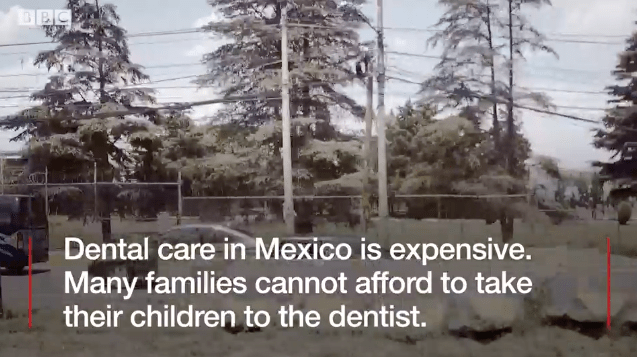
One out of three Mexican children below the age of 9 have teeth problems.

Screen Shot 2018-08-03 at 3.30.36 PM

bbc.com

One out of three Mexican children below the age of 9 have teeth problems.

The BBC followed Adan, a dentist working for a charity that provides dental services to kids living in poor areas of Mexico City, and Ana Laura, who struggles to keep her daughter’s mouth healthy.

Video produced by Natalia Guerrero and Alvaro A. Ricciardelli

WATCH THE VIDEO

Mexico police officers ‘underpaid, under-equipped’

a4c8f7eaa29c44f2a424a678262c80fe_18

aljazeera.com

Mexico City – Ismael Ramos Mendez had always wanted to be a police officer.

Now 45 years old, he has found himself patrolling a Mexico City metro station, on foot, with his only way home, a police car that won’t start because the battery is dead.

It is not much to show for 20 years of experience, two decorations for exhibiting bravery under fire, and a masters in police administration.

But Mendez said he knows very well why he is here rather than as a police chief or first inspector. He said it’s because doesn’t pay «the quota» – money officers on the street have to hand to their superiors in some of Mexico’s myriad police forces.

«When you refuse to pay the quotas, you end up like this,» he told Al Jazeera.

«You end up here. Walking, without a car, completely alone. Isolated.»

Many Mexicans don’t trust the police, seeing them as, at best inefficient and at worst, corrupt and in the same as league as organised crime. But many low-level police officers, like Mendez, are not only being forced to pay «the quota» to their superiors, but are also struggling with substandard equipment. Some do not have working patrol vehicles and many lack training. Despite years of talk of police reform, little has changed, even as the country’s violence rises to unprecedented levels.

READ MORE

Exclusive Interview: Ms. Adela Roman

PHOTO-2018-07-30-20-40-02

Mexico Today USA
July 30th, 2018

Exclusive Interview with Ms. Adela Roman, Municipal President-Elect of the city of Acapulco, México by Alfredo La Mont III

ALM: Ms Roman, what we know today about Acapulco is that it is extremely dangerous for tourist to go, therefore my question is is this just a perception or is this reality?

A. ROMAN: Ii is a perception. Acapulco can be visited by anyone who wants to come up, anytime from anywhere in the world and they have all the security to enjoy without any danger of any kind.

ALM: Unfortunately what the media has reported here is more of the perception you share. A recent article in the Washington Post discusses  the number of murders that happen in Acapulco and it seems to be the most dangerous city in Mexico, so who are more frequent the victims of crime, tourists or locals, or both?

A. ROMAN: Both because the tourists are prevented from enjoying the most beautiful bay in the world with warm water  year and round, and also the locals because we stop receiving badly needed income from tourism; but I can say that violence mostly  among the local gangs and  in this respect it does not affect tourism in itself.

ALM: I absolutely agree and  my next question was if is the crime that affects Acapulco  related to the drug cartels or is it more local gang related crime wave?

A. ROMAN: It is definitely more among the local gangs.

ALM: Finally, what is Ms. Roman specifically going to do different that will make an impact and change the perception that we have of Acapulco? Because, as you well know we have heard promises and offers, and new plans and more but the truth at the end has been that nothing changes, it just gets worse

A. ROMAN: What I’m going to do is attack the causes which are poverty, poor distribution of wealth, the corruption and impunity. We’re going to combat with everything and more clearly with programs to promote culture, the arts and  education, and we will be relentless in putting people to work.

ALM: Thank you very much fo your time. A final quick recommendation is that you have a dedicated person to monitor one of the most famous tourist advice websites: TripAdvisor, that keeps really up-to-date information from tourists on Acapulco and all tourist sites around the world.

My best wishes for a successful mandate

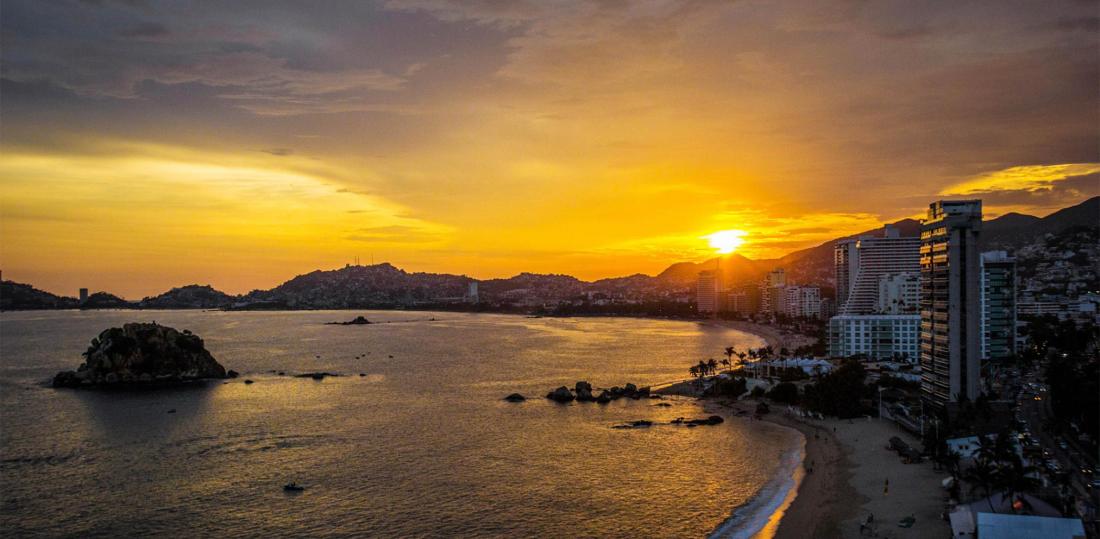
A. ROMAN: I want  to thank you too and extend an invitation to come and visit us. Acapulco is still considered the “Jewel of the Pacific” one of the most beautiful places in the world, warm water year round and my new administration with a commitment to fight very hard  to overcome the difficulties with the local gangas battling each other.

I extend this invitation to everyone to come and enjoy our city and see with your own eyes that there are no problems for tourists, we  welcome you with open arms!

guerrero_destinos-principales_acapulco_01
(Image: visitmexico.com)